Top Tech Gadgets You Can’t Live Without in 2025

admin / June 4, 2025

Top Tech Gadgets You Cant Live Without in 2025

Overview of Essential Tech Gadgets in 2025: Top Tech Gadgets You Can’t Live Without In 2025

Top Tech Gadgets You Can’t Live Without in 2025 – As we look ahead to 2025, the landscape of technology continues to evolve at a breathtaking pace, introducing gadgets that redefine convenience, functionality, and connectivity. The most impactful tech gadgets expected to hit the market include advancements in artificial intelligence, enhanced smart home devices, and innovative personal gadgets that cater to our daily needs. This evolution is rooted in a decade of rapid technological progress, where smartphones became ubiquitous, home automation gained traction, and wearable health tech transformed personal well-being.In the last ten years, essential gadgets have progressed significantly, from basic smartphones to powerful devices integrated with AI capabilities.

The introduction of smart home technology started a revolution, making homes more secure and efficient. Similarly, wearables have transitioned from fitness trackers to comprehensive health management systems, showcasing the remarkable journey of technology.

Smart Home Devices

The functionality and benefits of smart home devices set to launch in 2025 promise to further enhance our living environments. These devices will not only automate everyday tasks but also integrate advanced security features, allowing homeowners to monitor their properties remotely. With the rise of the Internet of Things (IoT), smart appliances will work seamlessly together to create a more intuitive home experience.Must-have smart home gadgets include:

  • Smart Thermostats: These devices learn user preferences, adjusting temperatures for comfort and energy savings. Prices range from $150 to $300.
  • Smart Security Cameras: Offering 24/7 monitoring with motion detection and facial recognition, these cameras start around $100.
  • Smart Lighting Systems: Allowing users to control lighting via smartphone apps, these systems typically cost between $30 and $200.
  • Smart Door Locks: Enhancing security with keyless entry options, starting at $100.
  • Smart Home Hubs: Central units that control interconnected devices, ranging from $50 to $150.

Wearable Technology

Advancements in wearable technology anticipated in 2025 will focus on health monitoring and lifestyle integration. With improved sensors and AI capabilities, wearables will track a range of health metrics, from heart rate to stress levels, providing insights that can inform personal health decisions.Different categories of wearables will cater to various user needs:

  • Health Trackers: Targeting fitness enthusiasts, these devices will analyze activity levels and offer personalized fitness advice.
  • Smartwatches: Beyond notifications, they will include features like ECG monitoring and blood sugar tracking, blending fashion with functionality.
  • Smart Glasses: These will integrate augmented reality to provide real-time information and navigation directly in the user’s field of vision.

The impact of wearables on personal health management is profound, offering users real-time data that encourages proactive health decisions.

Personal Transportation Gadgets

Emerging trends in personal transportation gadgets such as electric scooters and bicycles are shaping the future of urban mobility. Electric scooters, with their convenience and eco-friendliness, are becoming a popular choice for short commutes. Additionally, the rise of electric bicycles caters to those looking for a sustainable mode of transport that promotes physical activity.Predictions for the future of autonomous vehicles indicate their increasing integration into daily life, promising safer and more efficient travel options.

A look at the top five personal transportation gadgets includes:

Gadget Specifications Price
Electric Scooter Range: 25 miles, Speed: 15 mph $400
Electric Bicycle Range: 50 miles, Speed: 20 mph $1,200
Hoverboard Range: 10 miles, Speed: 10 mph $250
Segway Range: 24 miles, Speed: 12 mph $800
Self-driving Car (concept) Level 5 autonomy, Range: TBD $40,000 (estimated)

Mobile Technology Innovations, Top Tech Gadgets You Can’t Live Without in 2025

In 2025, smartphones are expected to undergo significant advancements, incorporating features such as foldable displays, enhanced cameras, and even AI-driven personal assistants that anticipate user needs. The advent of 5G technology will revolutionize mobile connectivity, offering faster data speeds and improved performance for all mobile gadgets.Anticipated mobile accessories will enhance user experiences, including:

  • Wireless Earbuds: With noise cancellation and longer battery life, expected to be around $150.
  • Portable Chargers: Essential for on-the-go charging, with prices ranging from $20 to $100.
  • Smartphone Cases: Featuring built-in battery packs and rugged designs, typically $25 to $80.

Gaming Gadgets

Top Tech Gadgets You Can’t Live Without in 2025

The future of gaming technology is set to be transformed by new gadgets aimed at enhancing the gaming experience. Virtual and augmented reality devices will play a pivotal role in creating immersive worlds, allowing gamers to interact with their environments like never before. Gaming peripherals are also evolving, introducing haptic feedback controllers and adaptive devices that respond to player movements and emotions, making gameplay more engaging and realistic.

Health and Fitness Tech

Innovative health and fitness gadgets are poised to shape wellness in 2025, integrating advanced technology to support personal health monitoring. Devices such as smart scales and sleep trackers will provide comprehensive data on health metrics, enabling users to make informed lifestyle choices.Emerging medical devices will aid in monitoring chronic conditions, ensuring users stay connected to their healthcare providers. A comparison table of top-rated health gadgets based on functionality and user feedback includes:

Device Features User Rating
Fitness Tracker Heart rate monitoring, sleep tracking 4.8/5
Smart Scale Body composition analysis, app connectivity 4.7/5
Sleep Tracker Sleep cycle analysis, wake-up alarms 4.9/5

Tech Gadgets for Remote Work

As remote work continues to be a norm, essential tech gadgets in 2025 will focus on enhancing productivity. Ergonomic gadgets, such as adjustable desks and supportive chairs, will significantly impact work efficiency by promoting better posture and comfort.Creating an ideal home office using the latest technology involves selecting gadgets that streamline work processes and enhance connectivity. Essential gadgets include:

  • Noise-Cancelling Headphones: Enhance focus in busy environments.
  • Webcams: High-definition options for clear video calls.
  • Multi-Monitor Setups: Increase productivity by expanding workspace.
Top Retro Gadgets To Consider Including

admin / May 29, 2025

Top Retro Gadgets To Consider Including A Nostalgic Journey

Top Retro Gadgets To Consider Including

Top Retro Gadgets To Consider Including

Top Retro Gadgets To Consider Including – The world of technology is constantly evolving, but there’s something undeniably charming about retro gadgets that hark back to earlier decades. These devices not only represent the pinnacle of innovation for their time but also tell a story about the culture and lifestyles of the past. They embody a unique blend of nostalgia and nostalgia-fueled enthusiasm, making them a fascinating subject for tech enthusiasts and collectors alike.Retro gadgets have significantly influenced the way we interact with technology today.

Over the decades, these devices have transitioned from bulky and simplistic tools to sleek and user-friendly machines. From the iconic Walkman to the classic Atari console, each gadget serves as a testament to the creativity and vision of its era. As we explore this list of retro gadgets, we’ll not only appreciate their historical impact but also their relevance in today’s tech landscape.

Overview of Retro Gadgets

Retro gadgets are defined as technological devices that were popular in bygone eras, typically from the late 20th century. They hold significant value in the history of technology, as they represent the innovations and cultural shifts of their respective times. The evolution of gadgets over the years showcases how far technology has come, with devices evolving from analog to digital formats.Notable examples include the following:

  • Typewriter: A staple of the office, it revolutionized written communication.
  • Vinyl Record Player: Brought music into homes and became a cultural phenomenon.
  • VCR: Changed the way we consumed entertainment by allowing us to record and replay television shows.

Popular Retro Gadgets from the 80s

The 1980s produced some of the most iconic gadgets that not only influenced technology but also shaped popular culture. These devices were characterized by their bold designs, innovative features, and significant cultural impact.Some of the most recognizable gadgets from the 1980s include:

  • Walkman: The portable cassette player that made music mobile.
  • Atari 2600: One of the first home video game consoles that popularized gaming.
  • Cassette Tapes: Key for personal music collections, allowing users to create mixtapes.
Gadget Features Price (1980s)
Walkman Portable cassette player, headphone jack $150
Atari 2600 Home gaming console, various cartridge games $199
Cassette Tape Compact storage for music, recordable $5

Timeless Retro Gadgets

Certain retro gadgets have proven their staying power, remaining popular even in today’s digital age. These gadgets are often celebrated for their classic design and functionality, making them desirable to both collectors and new users alike.Some of the timeless gadgets include:

  • Polaroid Camera: Instant photo printing remains a novelty and trend.
  • Record Players: Vinyl has seen a resurgence, with new models catering to modern audiences.
  • Game Boy: The handheld gaming device that revolutionized portable gaming.

The reasons for their enduring popularity include their unique aesthetic, the tactile experience they offer, and a growing consumer interest in vintage styles. Many of these gadgets have also been modernized; for instance, new Polaroid cameras now incorporate digital technology while retaining the essence of instant photography.

Collecting Retro Gadgets, Top Retro Gadgets To Consider Including

The appeal of collecting retro gadgets lies in their historical significance and the joy of nostalgia. Collectors often find a vibrant community surrounding this hobby, sharing tips, showcasing collections, and participating in events.To start a retro gadget collection, consider these tips:

  • Research: Understand the history and variations of the gadgets you’re interested in.
  • Join Communities: Engage with online forums and local collector groups.
  • Attend Fairs: Participate in collectible shows and swap meets.

A checklist for assessing the condition and value of retro gadgets includes:

  • Physical Condition: Check for scratches, dents, and overall wear.
  • Functionality: Ensure the device operates as intended.
  • Original Packaging: Having the original box or manuals can increase value.

Retro Gadgets in Popular Culture

Retro gadgets have found their place in movies and television, often serving as symbols of their time. They not only enhance storytelling but also influence fashion and lifestyle trends. The portrayal of these gadgets captures the imagination and nostalgia of different generations.Some films that prominently feature retro gadgets include:

  • Back to the Future: The DeLorean time machine became an iconic representation of 80s innovation.
  • The Breakfast Club: Showcased various 80s gadgets that defined teenage life.
  • Stranger Things: This series embraces retro aesthetics and technology, from walkie-talkies to arcade games.

These representations highlight how gadgets influence not just technology but also broader cultural trends, merging the past with contemporary lifestyles.

DIY Retro Gadget Projects

Creating DIY retro gadgets can be a fun and fulfilling project. Here’s a step-by-step guide to creating a simple retro gadget: a DIY vinyl record player.

1. Gather materials

Obtain a turntable kit, speakers, and an amplifier.

2. Assemble the turntable

Follow the kit instructions to put together the components.

3. Connect the speakers

Use standard wiring to connect your speakers to the amplifier.

4. Test

Play your favorite vinyl records and enjoy the nostalgic sound.Resources for sourcing materials include online marketplaces, local electronics stores, and secondhand shops. For customization, consider adding modern features such as Bluetooth connectivity or LED lighting to enhance your retro gadget’s functionality.

Future of Retro Gadgets

Emerging trends indicate a revival of retro gadgets in modern technology, with many companies producing retro-inspired devices that cater to nostalgic consumers. Brands are tapping into the desire for vintage aesthetics while incorporating contemporary technology.Examples of companies producing retro-inspired gadgets include:

  • Fender: Continues to produce vintage-style guitars with modern updates.
  • Polaroid: Offers instant cameras that blend classic design with digital features.
  • Game Boy-inspired devices: Several startups are creating handheld consoles that emulate the classic Game Boy experience.

Consumer interest in retro design remains strong, with many seeking products that blend nostalgia with practicality. This trend reflects a broader appreciation for vintage styles in a rapidly changing technological landscape.

12 Gadgets That Will Blow Your Mind

admin / May 23, 2025

12 Gadgets That Will Blow Your Mind Unveiled Today

Introduction to Mind-Blowing Gadgets: 12 Gadgets That Will Blow Your Mind

12 Gadgets That Will Blow Your Mind – In an era defined by rapid technological advancement, the term “mind-blowing” gadgets refers to devices that not only captivate our imagination but also significantly enhance our daily lives. These gadgets are often characterized by their innovative design, cutting-edge technology, and the ability to solve complex problems or improve efficiency in ways we never thought possible. Over the past decade, we have witnessed remarkable transformations in technology, from the advent of smartphones that fit in our pockets to smart home devices that learn our habits and preferences.

The impact of these gadgets transcends mere convenience; they have fundamentally changed the way we interact with the world around us. With each new introduction, we find ourselves relying more on these devices for everything from personal health tracking to home automation. The integration of artificial intelligence and the Internet of Things (IoT) into these gadgets has made them indispensable, allowing us to lead more connected and efficient lives.

Top 12 Gadgets That Will Blow Your Mind

As we explore the world of innovative technology, here are twelve gadgets that are making waves with their unique features and functionalities. Each of these devices epitomizes what it means to be mind-blowing in today’s tech landscape.

  1. Smartphone with Foldable Screen

    This innovative device combines the portability of a smartphone with the functionality of a tablet.

  2. Smart Home Assistant

    A voice-activated device that helps manage tasks, control smart home features, and answer queries.

  3. Fitness Tracker

    Wearable technology that monitors physical activity, heart rate, and sleep patterns to promote a healthier lifestyle.

  4. VR Headset

    A device that immerses users in virtual environments for gaming and training experiences.

  5. Smartwatch

    A wrist-mounted device that offers notifications, fitness tracking, and even mobile payments.

  6. Wireless Earbuds

    Compact audio devices that offer high-quality sound and seamless connectivity without the clutter of wires.

  7. Drone with HD Camera

    A flying device that captures stunning aerial footage and is used for recreation and professional projects.

  8. Smart Thermostat

    A device that learns your temperature preferences and can be controlled remotely to optimize energy usage.

  9. Portable Projector

    A mini projector that enables you to display content anywhere, making movie nights or presentations spontaneous and engaging.

  10. Self-Cleaning Water Bottle

    A bottle that purifies its water and cleans itself using UV-C light technology.

  11. Smart Glasses

    Eyewear that offers augmented reality features, allowing users to access information and notifications on the go.

  12. 3D Printer

    A device that creates three-dimensional objects from digital designs, empowering creativity and prototyping.

Comparison Table of Gadgets

The following table provides a comparison of the specifications of the gadgets mentioned above, highlighting their dimensions, battery life, and pricing to help you decide which gadget might suit your needs best.

Gadget Dimensions Battery Life Price
Smartphone with Foldable Screen 6.2 x 2.8 x 0.3 inches Up to 15 hours $1,800
Smart Home Assistant 3.3 x 3.3 x 5.9 inches Plug-in $99
Fitness Tracker 1.6 x 0.6 x 0.4 inches Up to 7 days $150
VR Headset 7.2 x 5.3 x 3.1 inches Up to 3 hours $400
Smartwatch 1.8 x 1.5 x 0.4 inches Up to 24 hours $350
Wireless Earbuds 1.2 x 0.8 x 0.6 inches Up to 5 hours $200
Drone with HD Camera 12.6 x 12.6 x 4.7 inches Up to 30 minutes $750
Smart Thermostat 3.2 x 3.2 x 1 inches Plug-in $249
Portable Projector 5.5 x 5.5 x 2.5 inches Up to 4 hours $300
Self-Cleaning Water Bottle 9 x 2.8 inches Up to 30 days $45
Smart Glasses 5.1 x 5.1 x 1.6 inches Up to 8 hours $500
3D Printer 15.6 x 15.6 x 15.8 inches Plug-in $1,200

Innovative Technologies Behind the Gadgets

Each of the gadgets listed utilizes a range of innovative technologies that enhance their functionality and performance. For example, the fitness tracker employs advanced sensors that monitor heart rate, steps taken, and sleep patterns, providing users with valuable insights into their health. The smart home assistant integrates artificial intelligence to understand user commands and preferences, making it an essential part of a connected home.Advancements in robotics and IoT have also played a pivotal role in gadget development.

Drones, for example, rely on sophisticated navigation systems and camera technology to capture high-quality imagery from the sky. The materials science behind these gadgets has evolved as well, leading to lighter, more durable devices that can withstand daily wear and tear while providing exceptional performance.

User Experiences and Reviews

User testimonials about the gadgets often highlight the practical benefits and occasionally the challenges faced with new technology. Many users praise the smart home assistant for its ability to streamline daily tasks, while some have reported minor issues with voice recognition accuracy. Technology review websites offer a wealth of information, comparing experiences and highlighting both positive and negative user feedback.Common issues reported include connectivity problems with smart home devices and battery life concerns with wearables.

However, manufacturers have been proactive in releasing updates and improvements, often addressing these issues to enhance user satisfaction.

Future Trends in Gadget Design

Looking ahead, several trends are poised to shape the future of gadget design. One significant trend is the focus on sustainability, as manufacturers are increasingly prioritizing eco-friendly materials and energy-efficient designs. Additionally, the integration of gadgets with smart city technologies promises to enhance urban living, with devices that can communicate with one another for improved efficiency and convenience.Another emerging trend is the convergence of health and technology, with gadgets designed not just for entertainment but also for better personal wellness management.

This could include advancements in health monitoring systems that provide real-time data to users and healthcare providers.

Practical Applications of the Gadgets

The practical applications of these gadgets in everyday life are vast and varied. For instance, the smart home assistant can manage your calendar, play music, and control lights, making it a versatile tool for home management. Similarly, fitness trackers serve as motivation for users to stay active, delivering insights that can lead to healthier lifestyle choices.To illustrate how these gadgets can improve efficiency and productivity, consider a scenario where someone uses a smart thermostat to optimize home heating while away at work, resulting in lower energy bills.

A table below Artikels the benefits versus drawbacks of each gadget in practical applications.

Gadget Benefits Drawbacks
Smartphone with Foldable Screen Versatile, portable Expensive, fragile
Smart Home Assistant Convenient, hands-free Privacy concerns
Fitness Tracker Health monitoring, motivation Battery life issues
VR Headset Immersive experience Motion sickness for some
Smartwatch Notifications on the go Limited app support
Wireless Earbuds Convenient, high-quality sound Easy to lose
Drone with HD Camera Aerial photography Legal restrictions
Smart Thermostat Energy savings Requires Wi-Fi
Portable Projector Versatile presentation tool Limited brightness
Self-Cleaning Water Bottle Convenient, hygienic Higher price point
Smart Glasses AR capabilities Heavy, battery concerns
3D Printer Creative potential High initial cost

Gadgets and Their Influence on Lifestyle

The integration of gadgets into our lives has drastically altered both personal and professional lifestyles. For instance, the adoption of fitness trackers has led many individuals to become more health-conscious, resulting in increased physical activity and improved health metrics. Similarly, smart home devices have transformed the way we manage our daily routines, enabling greater convenience and efficiency.As more people embrace these technologies, lifestyle changes such as remote work, flexible schedules, and a greater focus on health and wellness are becoming commonplace.

Such shifts indicate a move towards a more connected lifestyle, where technology plays a critical role in enhancing our daily experiences.

The Role of Gadgets in Entertainment

Gadgets have revolutionized the entertainment landscape, changing how we consume media and interact with gaming. The rise of VR and AR technologies provides immersive experiences that transport users to new worlds, offering unique gaming and storytelling opportunities. For entertainment enthusiasts, must-have gadgets include VR headsets for gaming, smart TVs for streaming high-definition content, and portable projectors for outdoor movie nights.

These devices not only enhance the viewing experience but also foster social connections through shared entertainment activities.

DIY Gadgets and Customization

The trend of DIY gadgets has gained traction as technology becomes more accessible. Individuals are increasingly interested in creating their own devices or customizing existing ones to better suit their needs. Simple projects, such as building a basic alarm system using a Raspberry Pi, enable tech-savvy enthusiasts to engage with technology in creative ways.Customization options are also expanding for existing gadgets, allowing users to personalize features, software, or aesthetics.

Such engagement fosters a deeper connection between users and their devices, enabling them to tailor technology to their unique lifestyles.

Ethical Considerations with Advanced Gadgets

As gadgets become more advanced, ethical considerations surrounding their usage are becoming increasingly important. Privacy concerns, data security, and the potential for misuse of technology are issues that both manufacturers and users must address. Manufacturers have a responsibility to ensure the safety of their gadgets, implementing robust security measures to protect user data. Society’s response to the integration of technology into everyday life is often mixed, with some embracing advancements while others express concerns regarding their impact on privacy and social interactions.

Budget-Friendly Alternatives

12 Gadgets That Will Blow Your Mind

For those interested in the latest gadgets but constrained by budget, there are plenty of alternatives that offer great value without breaking the bank. Each of the mind-blowing gadgets listed can be matched with a budget-friendly version that retains core functionalities. For instance, instead of a high-end smartwatch, users might consider a fitness tracker that provides health monitoring at a fraction of the cost.

The table below compares the costs and functionalities of premium versus budget options for some of the highlighted gadgets.

Gadget Premium Option Budget Option
Smartphone $1,800 $700
Smart Home Assistant $99 $50
Fitness Tracker $150 $50
VR Headset $400 $150
Smartwatch $350 $150
Wireless Earbuds $200 $50
Drone $750 $300
What 5G Means for the Future of Internet of Things

admin / May 17, 2025

What 5G Means for the Future of Internet of Things

Overview of 5G Technology: What 5G Means For The Future Of Internet Of Things

What 5G Means for the Future of Internet of Things

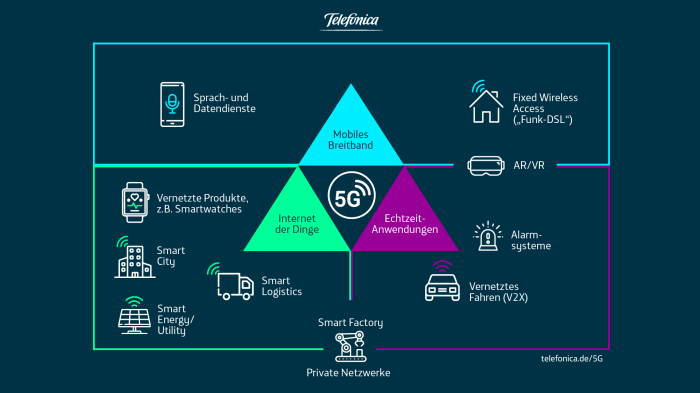
What 5G Means for the Future of Internet of Things – G technology represents a significant leap forward in mobile connectivity, introducing a suite of features designed to enhance the user experience and meet the demands of modern applications. With its ultra-fast speeds, reduced latency, and increased capacity, 5G is set to revolutionize how we connect and communicate.The fundamental features of 5G include:

  • Higher Speeds: 5G can achieve download speeds up to 10 Gbps, significantly faster than 4G’s maximum of around 1 Gbps.
  • Lower Latency: Latency can drop to as low as 1 millisecond, enabling real-time communication and interaction.
  • Increased Connectivity: 5G can support up to 1 million devices per square kilometer, facilitating the growth of the Internet of Things (IoT).

The differences between 5G and previous generations of mobile networks are notable. While 4G primarily focused on improving mobile broadband for users, 5G aims to connect a vast array of devices, ensuring seamless communication across various sectors. This shift opens up new possibilities for industries ranging from healthcare to transportation.The potential benefits of 5G for users and industries are immense.

Industries can leverage enhanced data analytics and automation, while users will experience faster downloads and improved streaming quality.

Impact of 5G on the Internet of Things (IoT)

G significantly enhances IoT device connectivity and communication by providing a more robust infrastructure for device interconnectivity. This advancement allows IoT applications to operate more efficiently, driving innovation and transformation across various sectors.Key examples of IoT applications that stand to benefit from 5G include:

  • Smart Homes: Devices like smart thermostats, lighting systems, and security cameras will operate more reliably and efficiently.
  • Autonomous Vehicles: 5G will enable faster data exchange between vehicles and infrastructure, enhancing safety and navigation.
  • Industrial Automation: Factories can implement more sophisticated automation systems, leading to increased productivity and reduced downtime.

With 5G, IoT networks will experience increased efficiency and data transfer speeds, allowing for real-time monitoring and analysis. This capability is crucial for industries that rely on timely data to make informed decisions.

Security Challenges and Solutions

The widespread adoption of 5G in IoT raises important security challenges. The increased number of connected devices creates a larger attack surface, making it easier for malicious actors to exploit vulnerabilities.Several security vulnerabilities that may arise include:

  • Device Authentication: Ensuring that only authorized devices can access the network is crucial in preventing unauthorized access.
  • Data Privacy: With increased data transfer, sensitive information could be intercepted if not properly secured.
  • System Overload: The sheer volume of connected devices could lead to potential denial-of-service attacks.

To address these vulnerabilities, potential security measures include implementing robust authentication protocols and encryption techniques. Encryption plays a critical role in securing data transmitted over 5G networks, while proper authentication ensures that devices are verified before gaining access.

Use Cases of 5G in IoT

Various industries are transforming through 5G-enabled IoT solutions, showcasing the technology’s versatility. In smart cities, 5G facilitates the integration of various systems, including traffic management, public safety, and environmental monitoring. For instance, smart traffic lights can adjust in real-time based on traffic flow, reducing congestion and improving safety.Healthcare is also evolving with 5G-connected devices, allowing for remote monitoring of patients, real-time data transmission, and telemedicine services.

This transformation enhances patient care and streamlines healthcare operations.

Future Trends and Innovations

Anticipated developments in IoT technology propelled by 5G include the expansion of AI and machine learning capabilities, leading to smarter applications and services. As businesses increasingly adopt these technologies, new business models will emerge, creating economic opportunities across sectors.Expected advancements in various sectors due to 5G in IoT are summarized in the table below:

Sector Expected Advancement
Healthcare Enhanced remote monitoring and telehealth services.
Transportation Improved autonomous vehicle communication and safety systems.
Manufacturing Increased automation and real-time monitoring of production lines.
Agriculture Smart farming solutions for crop monitoring and management.
Smart Cities Integrated systems for traffic, utilities, and emergency services.

Global Adoption and Infrastructure, What 5G Means for the Future of Internet of Things

The current state of global 5G rollout is rapidly evolving, with many countries investing heavily in infrastructure to support IoT adoption. The implications of this rollout are profound, as increased connectivity can lead to enhanced economic growth and innovation.Infrastructure requirements necessary to support 5G for IoT applications include:

  • Dense Network of Small Cells: To ensure signal strength and coverage in urban areas.
  • Fiber Optic Cables: Essential for connecting base stations to the core network.
  • Network Slicing: A technique that allows multiple virtual networks to operate on a single physical infrastructure, tailored for specific applications.

Regions leading in 5G implementation, such as South Korea, China, and parts of Europe, are significantly influencing global IoT trends. Their advancements set benchmarks for other countries striving to enhance their own IoT capabilities through 5G.

5g technology

admin / May 11, 2025

5g technology Transforming Connectivity and Industries

Overview of 5G Technology

5g technology – G technology represents a significant leap in mobile communication, characterized by its high speed, low latency, and increased capacity. This next-generation technology is not only designed to enhance mobile broadband but also to support a vast array of applications, including the Internet of Things (IoT) and smart cities. Understanding 5G requires a look back at its predecessors, as it is the culmination of decades of evolution in mobile technology.The evolution from previous generations, namely 1G through 4G, has laid the groundwork for 5G.

1G introduced analog voice communication, while 2G brought digital voice and SMS. 3G enhanced data connectivity, allowing for mobile internet, and 4G LTE further improved speed and reliability, enabling HD video streaming and online gaming. The key features that distinguish 5G from earlier technologies include ultra-reliable low latency communication (URLLC), enhanced mobile broadband (eMBB), and massive machine-type communication (mMTC), which together promise a more connected and efficient world.

Technical Aspects of 5G

The architecture of 5G networks is designed to support a wide range of services and devices, showcasing a more flexible and efficient infrastructure. Central to this architecture are several key components: the 5G core, radio access network (RAN), and user equipment. The 5G core is a cloud-native, software-driven architecture that allows for dynamic resource allocation and management.Millimeter waves play a crucial role in 5G technology, as they enable higher data rates and increased capacity.

These high-frequency waves, which fall within the 30 GHz to 300 GHz range, can transmit large amounts of data quickly, although they have a shorter range compared to lower frequency bands. Network slicing is another significant aspect of 5G, allowing operators to create multiple virtual networks within a single physical 5G infrastructure. This flexibility enables tailored network experiences for different applications, ensuring that critical services like emergency response can function alongside less urgent data traffic without interference.

Applications of 5G Technology

The impact of 5G on mobile communications is profound, enhancing user experience with faster download speeds and lower latency. This improvement translates into smoother streaming, more responsive gaming, and better overall connectivity. The versatility of 5G also extends into various industries that stand to benefit significantly from its advancements.Industries poised to reap the rewards of 5G include:

  • Healthcare: Remote surgeries and telemedicine will become more viable.
  • Transportation: Enhancements in autonomous vehicle technology.
  • Manufacturing: Smart factories will leverage IoT devices for efficiency.
  • Entertainment: Augmented reality (AR) and virtual reality (VR) experiences will improve drastically.
  • Agriculture: Precision farming will be enhanced through real-time data analysis.

Innovative applications enabled by 5G, such as smart cities, will transform urban living. Connected infrastructure can optimize traffic management, improve energy efficiency, and enhance public safety through real-time data sharing.

Challenges and Limitations of 5G

Despite its many advantages, the deployment of 5G networks faces several challenges. One primary concern is the high cost associated with infrastructure development, as 5G requires a denser network of small cells compared to previous generations. Additionally, the rollout of 5G may lead to coverage gaps, particularly in rural areas where investment may be less appealing.Potential health concerns related to 5G technology have sparked debates, with opponents citing the increased exposure to electromagnetic fields (EMF).

However, current scientific consensus indicates that 5G technology operates within safe limits established by international health organizations.When comparing the limitations of 5G with its capabilities, certain gaps emerge. While 5G promises high speeds and low latency, its effectiveness can be hindered by physical obstacles and interference, which may affect connectivity in certain environments.

Future of 5G Technology

Looking ahead, the next decade is expected to witness significant developments in 5G technology. Innovations such as improved spectrum efficiency, advanced network management, and integration with artificial intelligence (AI) will drive performance enhancements. The global impact of widespread 5G adoption could be transformative, with projections indicating substantial economic growth, advancements in various sectors, and increased productivity. A roadmap for the integration of 5G in emerging technologies Artikels steps for ensuring compatibility and cooperation between 5G and innovations like AI, edge computing, and blockchain.

Regulatory and Policy Considerations

Government regulations play a pivotal role in the deployment of 5G networks. Policymakers are tasked with ensuring fair access to spectrum, addressing security concerns, and fostering competition among service providers. These regulations will shape the landscape of 5G technology and its implementation.Key stakeholders involved in shaping 5G policy include telecommunications companies, government agencies, industry groups, and international organizations. Collaboration among these parties is essential for establishing standards that ensure interoperability and security.International collaboration is also evident in the development of 5G standards and practices.

Various nations are working together to create a unified approach to 5G, facilitating cross-border communication and enhancing global connectivity.

Comparison with Other Technologies

5g technology

When comparing 5G technology with 4G LTE and Wi-Fi 6, several performance metrics highlight the strengths and weaknesses of each. 5G offers significantly higher speeds than both 4G and Wi-Fi 6, with potential download rates exceeding 10 Gbps. Additionally, 5G’s low latency makes it superior for applications requiring real-time communication.While Wi-Fi 6 enhances performance in dense environments, 5G provides a broader coverage area, making it more suitable for mobile devices.

The competitive landscape between 5G and satellite internet also reveals differences in application; while satellite offers global coverage, 5G excels in urban and suburban settings where high-speed connectivity is paramount.

Economic Impact of 5G, 5g technology

The economic benefits of 5G implementation for businesses are expected to be substantial. Enterprises that leverage 5G capabilities can enhance their operational efficiency, leading to cost reductions and increased revenue. Job creation linked to the growth of the 5G sector is projected to be significant, as new roles emerge in network management, device manufacturing, and application development. Statistics showcase the potential market growth driven by 5G, with industry analysts estimating that the global 5G market could reach trillions of dollars by the end of the decade.

This growth reflects the technology’s capacity to revolutionize how businesses operate and how consumers interact with technology.

Global technology network

admin / May 5, 2023

Global technology network shaping the future of innovation

Overview of Global Technology Networks

Global technology networks have emerged as crucial frameworks in our interconnected world, facilitating collaboration, innovation, and the sharing of knowledge across borders. These networks enable organizations and individuals to tap into diverse resources and expertise, leading to rapid advancements in technology and business practices. As we explore the components and historical context of these networks, it becomes evident how significantly they shape our global landscape.The fundamental components of a global technology network include collaborative platforms, shared resources, and a diverse pool of stakeholders ranging from corporations and governments to academia and non-governmental organizations.

These elements work together to foster innovation and enhance competitiveness by enabling real-time communication and resource sharing. Historically, global technology networks have evolved from localized systems of information exchange to comprehensive networks driven by advancements in digital communication and globalization. Over time, these networks have adapted to the changing technological landscape, reflecting the increasing importance of global collaboration.

Importance of Global Technology Networks

Global technology network

Global technology networks offer a wide array of benefits to both businesses and societies. Their capacity to enhance innovation and foster collaboration is unparalleled, resulting in the development of groundbreaking technologies and solutions that address pressing global challenges. By connecting various stakeholders, these networks drive economic growth and development through increased efficiency and competitiveness.Key benefits of global technology networks include:

  • Access to New Markets: Businesses can expand their reach and tap into new customer bases, enhancing their revenue potential.
  • Enhanced Innovation: Collaborative efforts lead to the sharing of ideas and resources that spur creativity and technological advancements.
  • Knowledge Sharing: Organizations benefit from shared expertise and best practices, leading to improved processes and products.
  • Economic Growth: Through collaboration, networks stimulate job creation and economic development in various regions.

The synergy created within these networks not only encourages creativity but also leads to more sustainable practices, benefiting society at large.

Key Players in Global Technology Networks

Numerous entities play pivotal roles in global technology networks, including corporations, governments, and non-governmental organizations. These stakeholders each contribute unique perspectives and resources, creating a rich tapestry of collaboration.Key players include:

  • Corporations: Major tech firms that drive innovation and provide funding for research and development.
  • Governments: Public institutions that facilitate policies, funding, and infrastructure to support technological advancement.
  • NGOs: Organizations that focus on sustainable development and often collaborate with other sectors to implement tech-driven solutions.
  • Academia: Educational institutions that conduct research and provide a skilled workforce essential for technological growth.

Successful partnerships within these networks often lead to transformative initiatives, such as joint research projects or technology-sharing agreements that can significantly enhance capabilities.

Challenges Facing Global Technology Networks

Despite their many advantages, global technology networks face several challenges that can hinder effective collaboration. Identifying and addressing these barriers is essential for maximizing their potential.Key challenges include:

  • Collaboration Barriers: Differences in culture, language, and organizational goals can pose significant obstacles to collaboration.
  • Cybersecurity Threats: Increasing reliance on digital infrastructure raises concerns about data breaches and cyber attacks that can compromise sensitive information.
  • Regulatory Issues: Varying regulations across countries can complicate collaboration, especially in areas like data privacy and intellectual property rights.

Addressing these challenges requires strategic planning and ongoing dialogue among stakeholders to create a more conducive environment for collaboration.

Future Trends in Global Technology Networks

As we look to the future, emerging technologies are poised to transform global technology networks in profound ways. Innovations such as artificial intelligence, blockchain, and the Internet of Things (IoT) will facilitate even greater connectivity and efficiency within these networks.Anticipated shifts include:

  • Increased Automation: The rise of AI will streamline collaborative processes, making it easier for organizations to share insights and work together.
  • Enhanced Security Protocols: As cyber threats evolve, so too will security measures to protect data and ensure safe collaboration.
  • Sustainability Focus: Networks will increasingly prioritize sustainable practices, reflecting a global shift towards environmentally responsible technologies.

These trends highlight the necessity for organizations to adapt and innovate continuously while maintaining ethical standards in their operations.

Case Studies of Successful Global Technology Networks

Examining successful global technology networks provides valuable insights into effective strategies and practices. One notable example is the collaboration between major pharmaceutical companies and research institutions during the COVID-19 pandemic. This partnership led to the rapid development and distribution of vaccines, showcasing the power of collective innovation.Key strategies that contributed to their success included:

  • Open Collaboration: Sharing research data and resources to accelerate development timelines.
  • Agile Decision-Making: Quick responses to emerging challenges and the ability to pivot strategies as needed.
  • Public-Private Partnerships: Leveraging government support and funding to scale solutions effectively.

These case studies illustrate how collaboration can yield significant benefits and rapid advancements in technology.

Methods for Building Effective Global Technology Networks

Organizations aiming to establish their own technology networks can follow a strategic approach to foster effective collaboration. A step-by-step guide includes:

1. Identify Objectives

Clearly define the goals and purpose of the network.

2. Select Key Stakeholders

Engage a diverse range of participants from relevant sectors.

3. Establish Communication Tools

Utilize platforms that facilitate real-time collaboration and information sharing.

4. Create Governance Structures

Set up frameworks to manage operations and decision-making processes.

5. Monitor and Adapt

Regularly assess the network’s performance and make adjustments as necessary.Effective communication is paramount to maintaining relationships within global technology networks. Utilizing various platforms for collaboration ensures that all members remain engaged and informed, fostering a strong sense of community and shared purpose.

Role of Education and Research in Global Technology Networks

Educational institutions play a vital role in the development of global technology networks by providing research capabilities and fostering talent. Universities and research centers contribute significantly through cross-border collaboration, enhancing the overall knowledge base within these networks.Key aspects include:

  • Research Collaboration: Joint research initiatives across institutions lead to innovative solutions and advancements in technology.
  • Knowledge Sharing Initiatives: Programs that promote the exchange of ideas and best practices among institutions and organizations.
  • Skilled Workforce Development: Educational programs tailored to meet the needs of the technology sector ensure a steady pipeline of talent.

These contributions from educational and research institutions are essential for sustaining the dynamism and effectiveness of global technology networks.